Engineering overview
Gunnebo HiSec Nova:
Three Approaches to Single-Person Passage Control
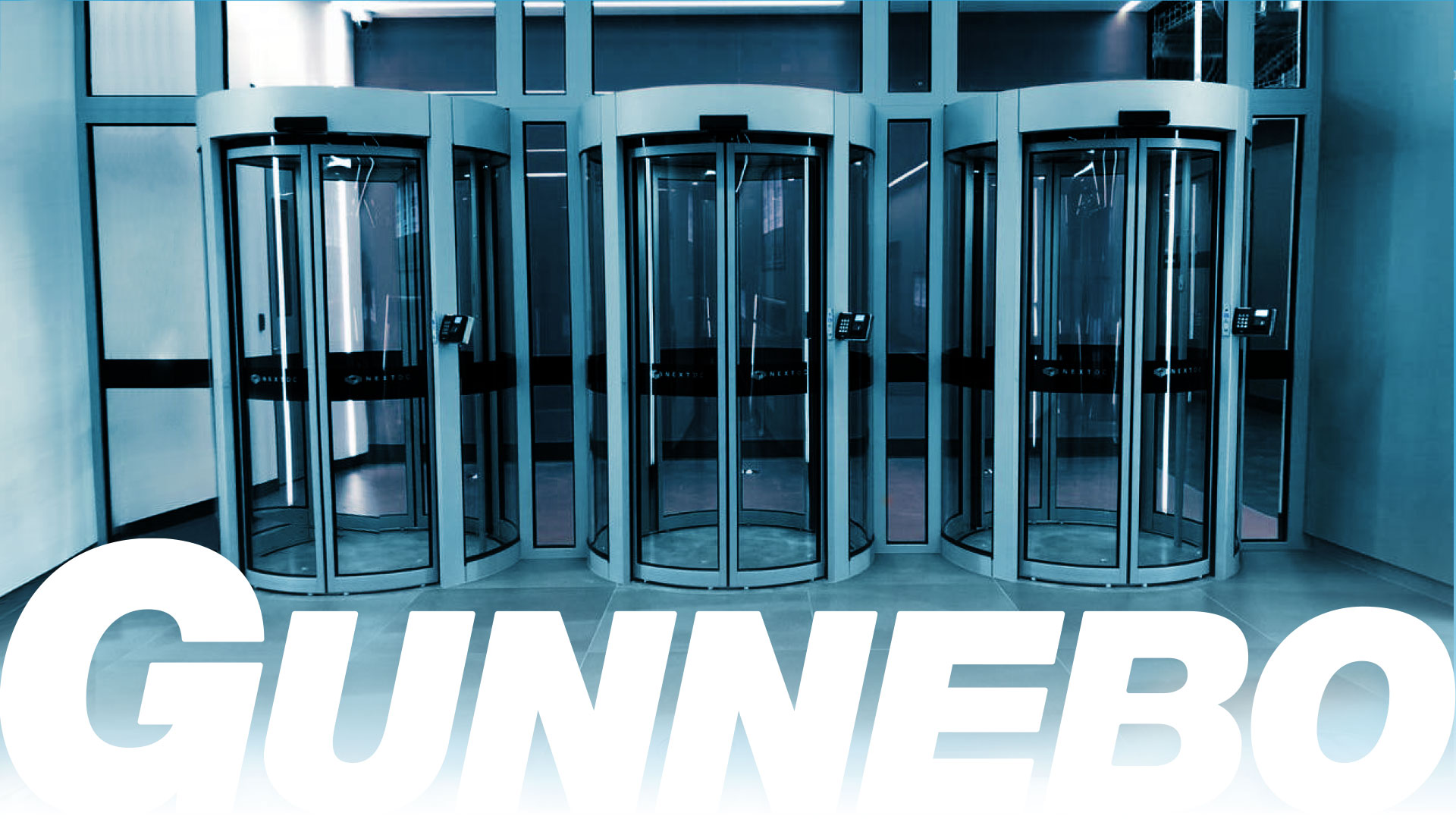
Gunnebo has introduced the new HiSec Nova, a motorized security booth designed for controlled passage through secured access points.
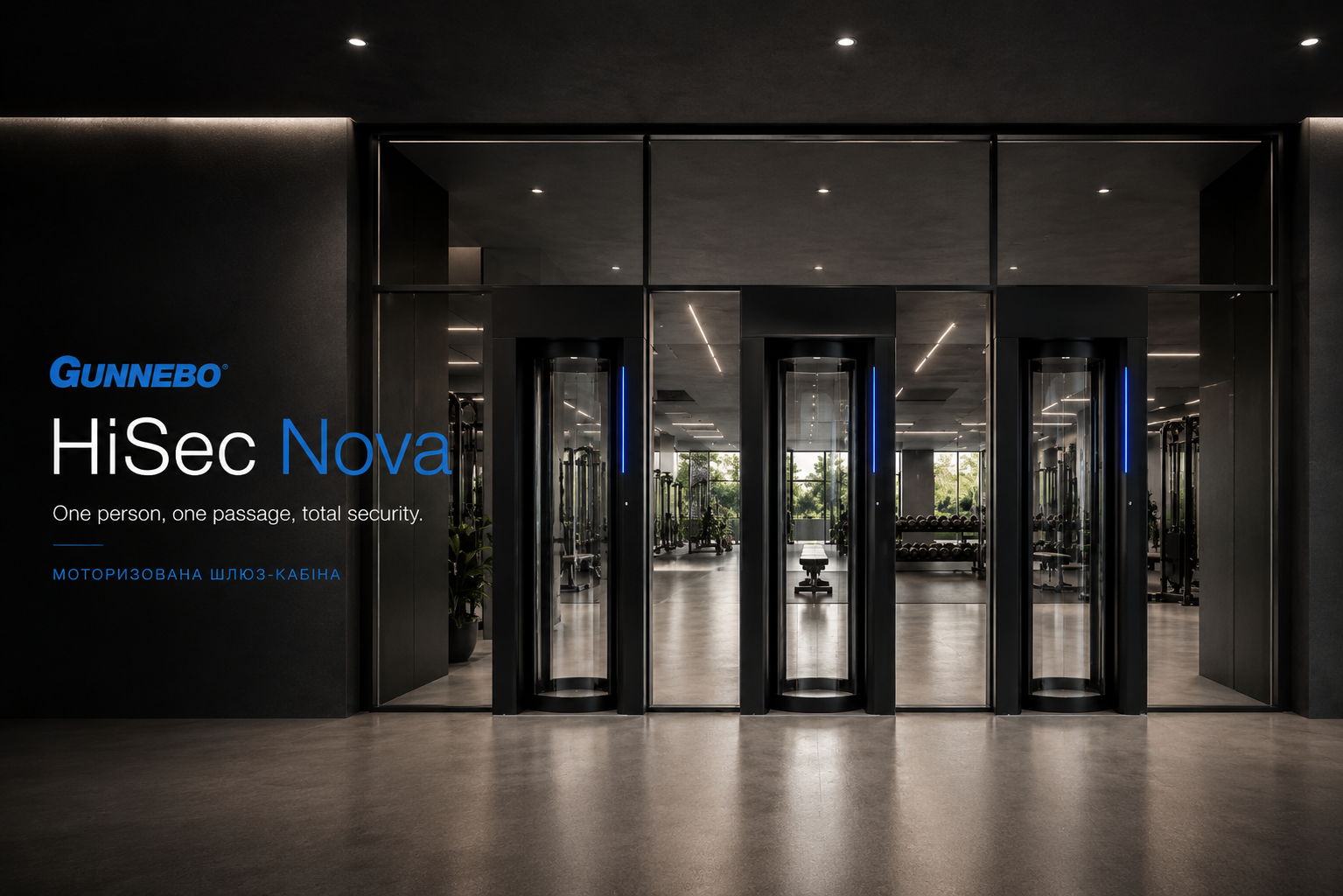
As standard, it includes presence detection, allowing the system to determine whether the booth is occupied. Single-person passage control is a separate option. For applications where it is required, the Visira range offers different detection methods that can be deployed individually or combined to match the access scenario.
This is where HiSec Nova goes beyond the conventional “two interlocked doors” concept. Some Visira systems measure physical characteristics of what is inside the booth—such as occupied volume or the area where pressure is applied. Visira Omni, by contrast, counts the people themselves.
Volume, Pressure, or People Counting
Visira is Gunnebo’s range of single-person detection systems available for HiSec Nova. They all answer the same question: is there actually only one person inside the booth? The difference lies in what each system measures to determine that.
Visira Core uses time-of-flight sensors to measure the volume occupied inside the booth.
Passage is permitted when the measured volume remains within a configured threshold.
Visira Core Option uses a digital contact mat with two detection zones.
If pressure is detected outside the smaller inner zone, passage is not permitted. The mat can also be combined with ultrasonic detection for an additional layer of detection.
Visira Omni takes a different approach. Two cameras combined with AI-based image analytics detect and count the people inside the security booth.
The system operates independently: a bag, suitcase, or wheelchair inside the booth does not add another person to the count.
The difference becomes particularly relevant in real-world passage scenarios. Volume-based detection evaluates the space occupied inside the booth, so a large backpack, suitcase, or other bulky item increases that volume and may affect the configured threshold logic. Omni counts people, so the items they carry remain just that—items.
That makes one question worth answering early in the configuration process: what will people actually be carrying through this access point?
For relatively consistent traffic, a single detection method may be sufficient.
Compact or Wide: Match the Configuration to the Passage Scenario
HiSec Nova is available in two configurations: Compact, with a 600 mm passage width, and Wide, with a 900 mm passage width. Both configurations provide a passage height of 2100 mm.
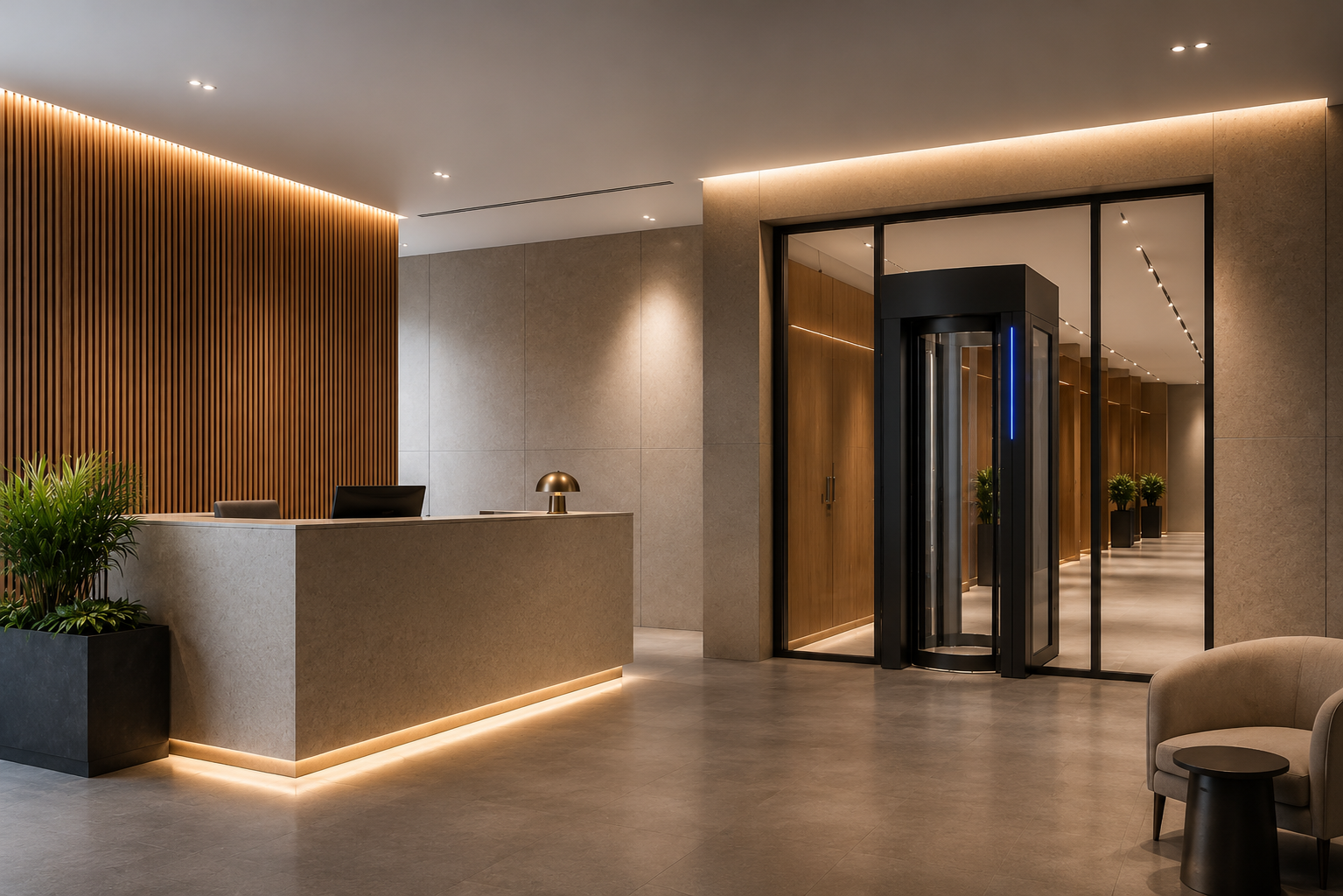
The wider passage offered by the Wide configuration, combined with Visira Omni’s ability to distinguish a wheelchair from an additional person, makes this configuration particularly relevant for projects with accessibility requirements. Whether the 900 mm passage width meets the specific accessibility requirements of a given project, however, depends on the applicable regulations and site conditions.
That is why configuration should start with the passage scenario, not the option list.
- Who will be using the security booth?
- What will they be carrying?
- What passage width does the project require?
- And what level and method of single-person passage control is actually needed?
Six Passages per Minute — but the Full Cycle Matters
HiSec Nova has a stated throughput of approximately six passages per minute when used with a contactless reader and when no additional user actions are required during passage.
However, a security booth operates as a sequential cycle: authorization, opening of the first door, entry, presence detection, closing of the first door, opening of the second door, exit, and finally closing of the second door once the booth is clear. Only then is the system ready for the next passage.
For that reason, simply multiplying six passages by 60 minutes should not be treated as a guaranteed hourly throughput. What matters for system design is the actual peak traffic expected at the specific access point.
HiSec Nova also supports reader placement both outside and inside the booth, enabling single- or two-factor authentication. This introduces another variable into the real-world passage cycle and should be factored into throughput planning.
The entire entrance does not necessarily need to rely on a single type of access equipment. Where the priority is moving a high volume of people quickly, a different type of entrance solution may be more appropriate. A security booth is designed for a different task: controlled, sequential passage through a secured access point.
Glazing: What Matters Is the Level of Protection
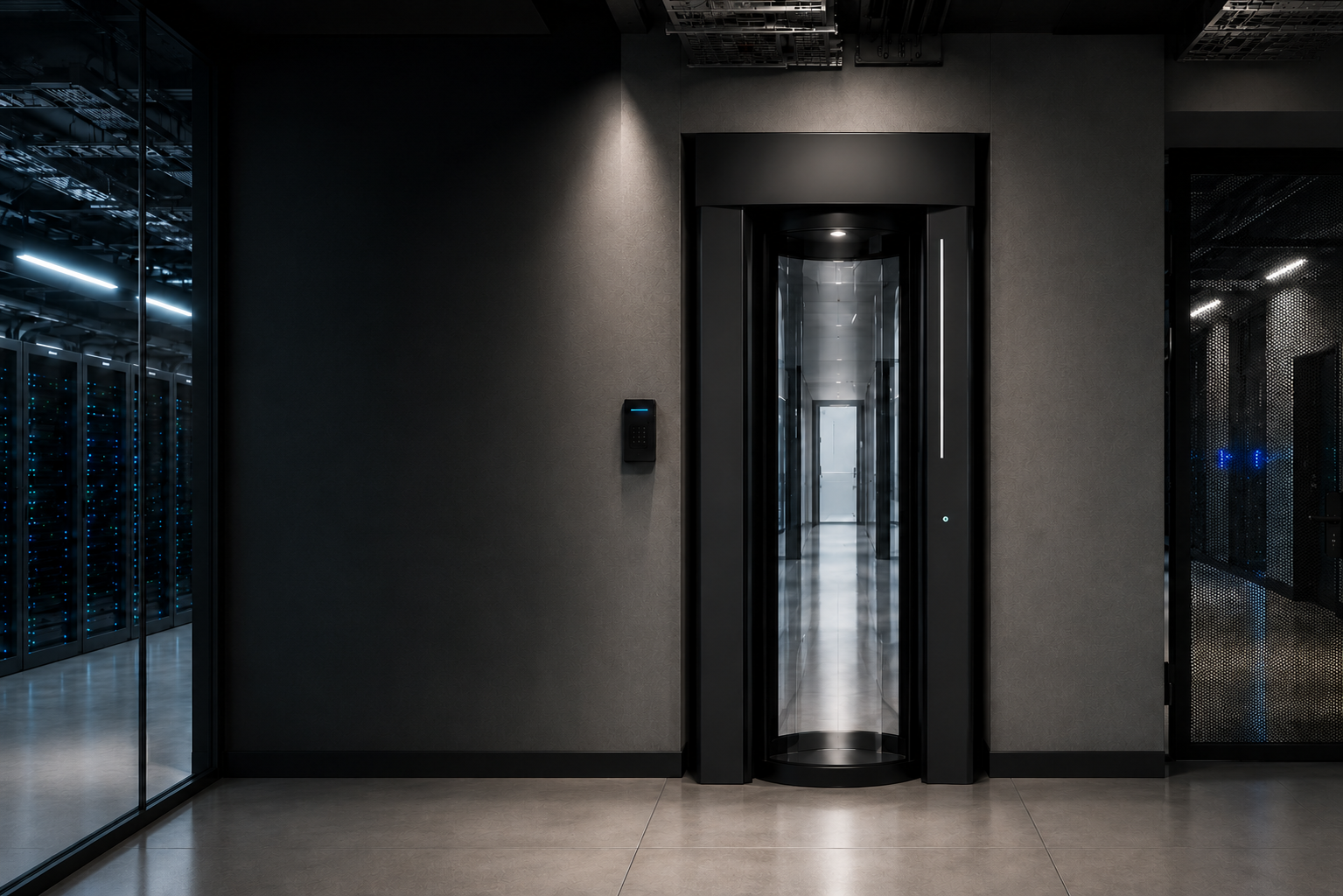
In its standard configuration, HiSec Nova uses 12 mm laminated security glazing rated BR1/S according to EN 1063 and P4A according to EN 356.
Under EN 1063, BR1 corresponds to testing with a .22 LR projectile and represents the lowest level on the standard’s ballistic resistance scale.
P4A defines the resistance of the glazing itself to manual attack under EN 356. The distinction here is important: BR1/S and P4A are ratings of the glazing, and should be interpreted as such. A burglary-resistance class under EN 1627 applies to the complete assembly. No such class is stated for HiSec Nova, so BR1/S and P4A should be read specifically as characteristics of the glazing rather than of the security booth as a whole.
In its standard configuration, HiSec Nova is rated IP20 and operates within a temperature range of −10 to +45 °C. For installations beyond a strictly indoor environment, Gunnebo also offers a separate semi-outdoor version.
In a Power Failure, No One Should Be Left Trapped Inside
HiSec Nova’s backup battery provides approximately 200 opening and closing cycles or up to 24 hours of standby operation.
Once the backup battery is depleted, the system automatically locks the door on the building side, maintaining the security of the access point. At the same time, the door on the outside remains manually operable.
The logic is practical: a person should not be left trapped inside the security booth after a loss of power, while the controlled access point still needs to remain secure.
Up to 600 kg — and That’s Part of the Project, Too
HiSec Nova Compact weighs approximately 400–450 kg, while the Wide version weighs 550–600 kg. The security booth is delivered fully assembled and requires lifting equipment for installation.
The foundation requirements are equally specific: concrete with a minimum strength of 30 N/mm², levelness within ±5 mm across the entire installation area, and a minimum depth of 150 mm. The required foundation footprint is 995 × 995 mm for Compact and 1500 × 1500 mm for Wide.
These are no longer minor installation details. The booth’s weight, delivery logistics, lifting equipment, and foundation preparation can have a meaningful impact on both project cost and site readiness. Planning for these requirements early helps avoid discovering installation constraints only after the equipment arrives on site.
No Single Technology Fits Every Scenario
Visira Core measures the volume occupied inside the booth. Core Option adds pressure-zone detection and can be combined with ultrasonic detection. Visira Omni takes a different approach, using cameras and image analytics to detect and count people directly.
Single-person detection is not included in the standard HiSec Nova configuration. The security booth can operate with its standard presence detection alone; where single-person passage control is required, one of the dedicated detection systems—or a combination of them—can be added to match the access scenario.
The question, then, is not which Visira system is “better,” but which detection method best fits the requirements of a specific access point. If users regularly pass through with bags, luggage, or other items, the way the system determines the number of people becomes particularly important. In another project, the deciding factors may instead be passage width, peak traffic, glazing requirements, or system behavior during a power failure.
Configuration logic
That flexibility is one of HiSec Nova’s key strengths: the configuration can be built around the real-world passage scenario, with the appropriate single-person detection method—or combination of methods—selected to match the project requirements.
If you are considering HiSec Nova for a specific site, FortiSec can help evaluate the passage scenario and select a security booth configuration that matches the project requirements.