Engineering overview
Genetec Security Center: How a Unified Security Architecture Works
Large sites rarely rely on a single security system. Video surveillance, access control, license plate recognition, intrusion detection, and intercom systems typically coexist within the same environment. Each may work perfectly well on its own.
During an incident, the operator may see an access control event in one window, video in another, and an intrusion alarm in a third. Technically, every system has done its job. But it is still up to the operator to connect these separate events and understand what is actually happening.
A Common Interface Doesn’t Make a Unified System
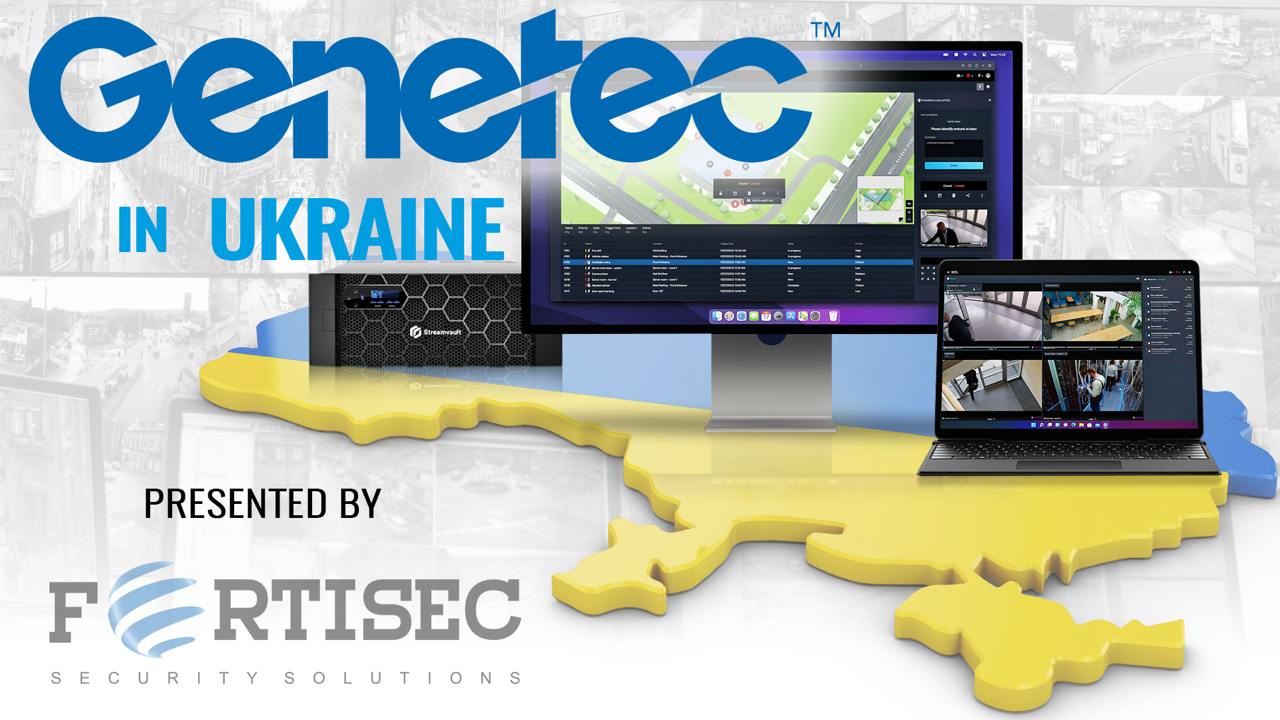
Security Center provides a common platform layer across multiple physical security functions. Its core components include Omnicast for video surveillance, Synergis for access control, and AutoVu for license plate recognition. Intrusion detection, communications, and integrations with third-party systems can also be incorporated into the platform.
But the number of components you can connect matters less than the level at which they actually work together.
The most basic level is a common interface.
The operator works within a single application instead of switching between clients from different vendors. This simplifies day-to-day operations, but a common interface alone does not make the underlying system unified.
The next level is shared entities and events.
Cameras, doors, zones, ALPR devices, and alarms are managed within a common environment, with shared access permissions, response workflows, and reporting. This reduces the need to build separate point-to-point integrations between subsystems for every new use case.
And finally, there is operational context.
An event from one subsystem can be enriched with data from another, so the operator does not have to manually correlate separate pieces of information to understand what is happening.
This is what distinguishes a unified platform from simply bringing multiple systems together in a common interface.
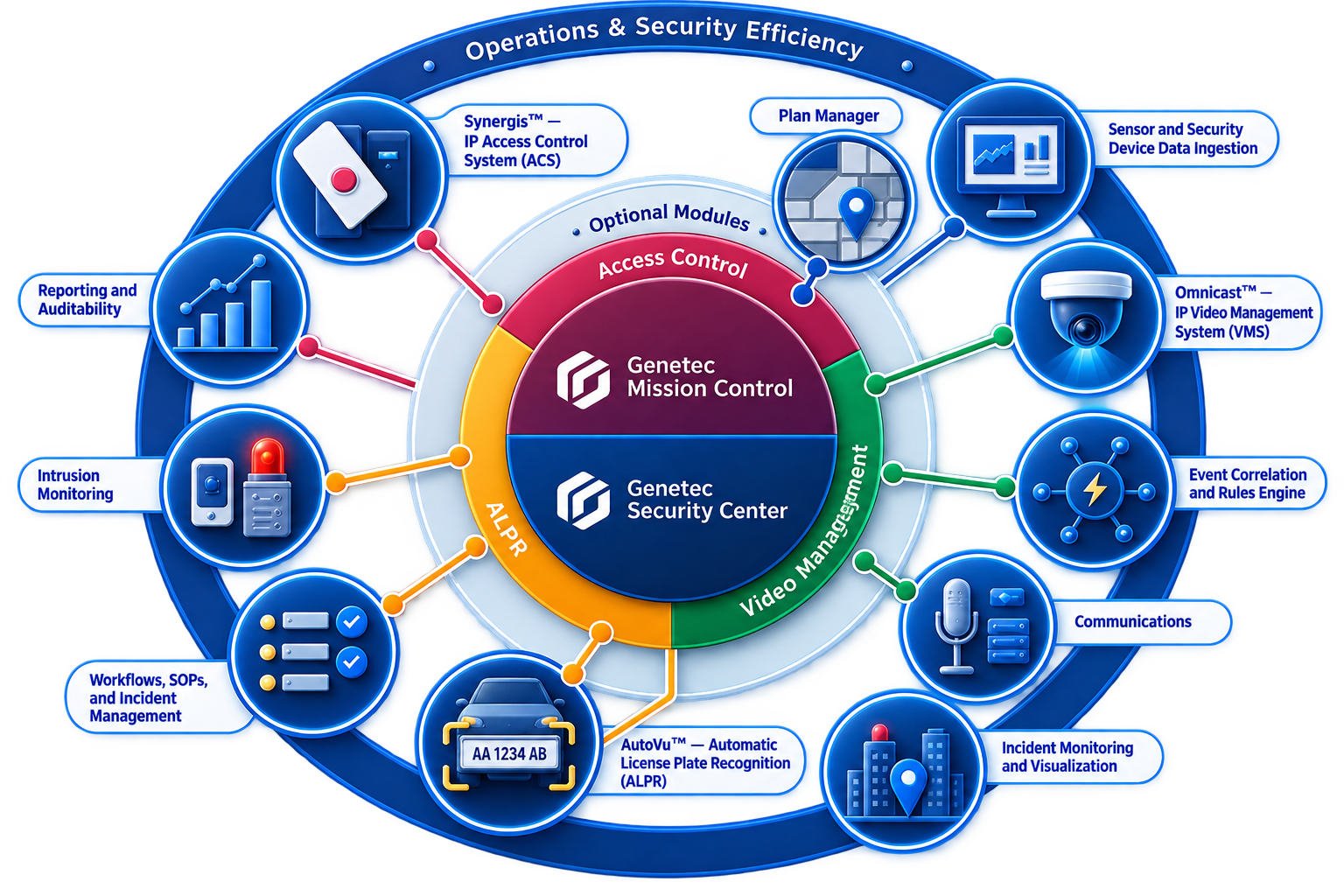
A unified approach, however, does not mean that every device on a site has to come from the same manufacturer. Security Center supports an ecosystem of IP devices and partner integrations, while Synergis can work with third-party controllers, readers, and electronic locks.
For a project, this has an important practical implication: moving to a common platform does not necessarily require replacing all existing field devices from the outset. The first step is to determine what can be retained from the existing infrastructure and how fully it can participate in the new architecture.
Centralized Management Doesn’t Require Centralized Infrastructure
Once an environment spans multiple sites, another architectural question arises: do all of those sites need to be consolidated into a single, physically centralized system for operators to manage them as one?
In Security Center, this is handled through Federation.
Individual sites can remain self-contained Security Center systems, with their own infrastructure, archives, and local logic. Federation connects these systems to a central Security Center system, giving operators access to cameras, doors, alarms, ALPR, and other available entities across the remote sites.
The key point is that the local systems retain their local autonomy. They continue to operate independently, while the central layer provides the visibility and management capabilities needed for centralized operations.
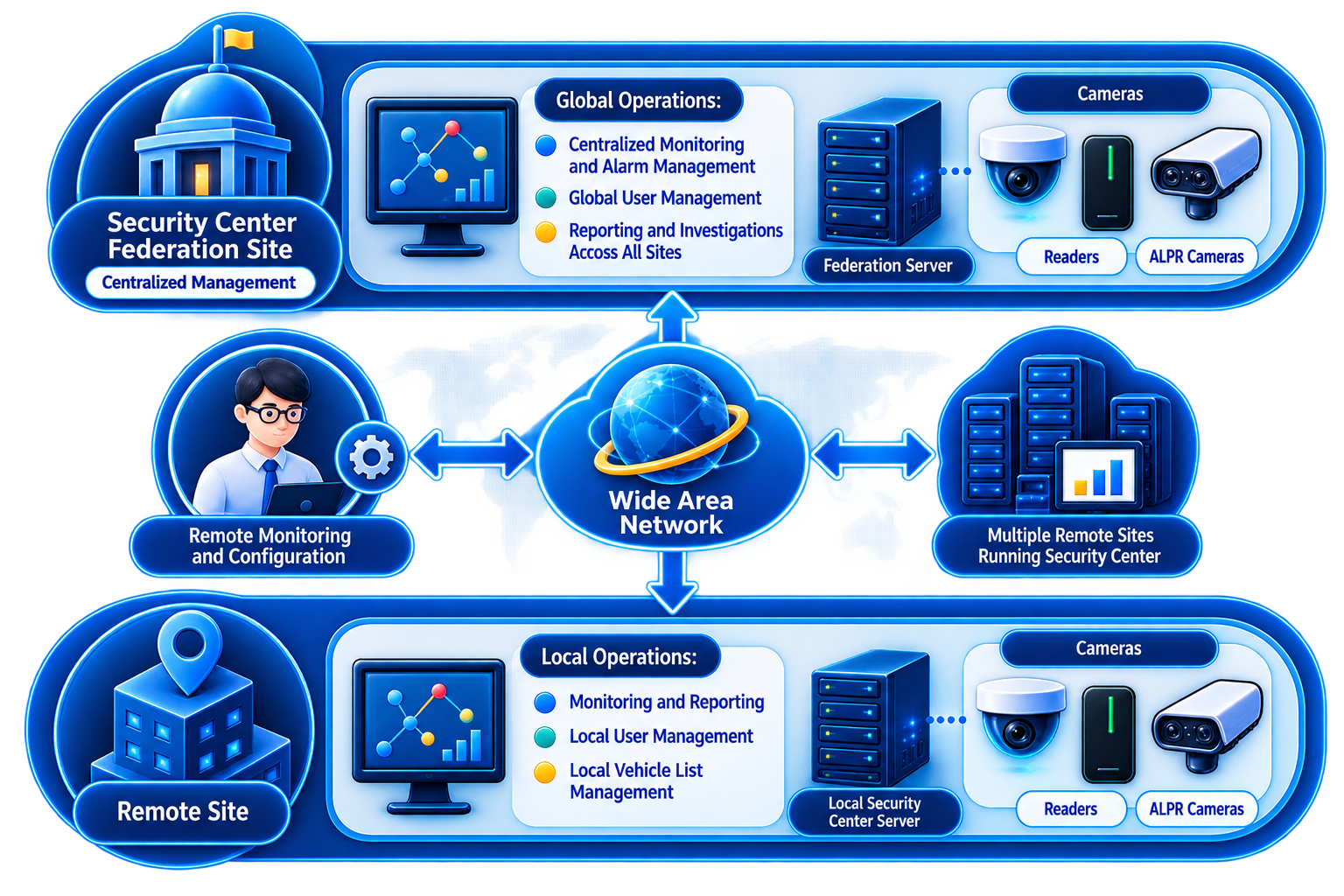
For an architect, this highlights an important distinction between two concepts:
For presales, this changes how the problem should be framed. Instead of starting with, “What central server do we need for all our sites?”, the first question should be: which data, events, and functions need to be available centrally, and what should remain local?
Operators Need to Know Not Just What Happened, but Where
As the system grows, another challenge emerges: maintaining context as the volume of events increases.
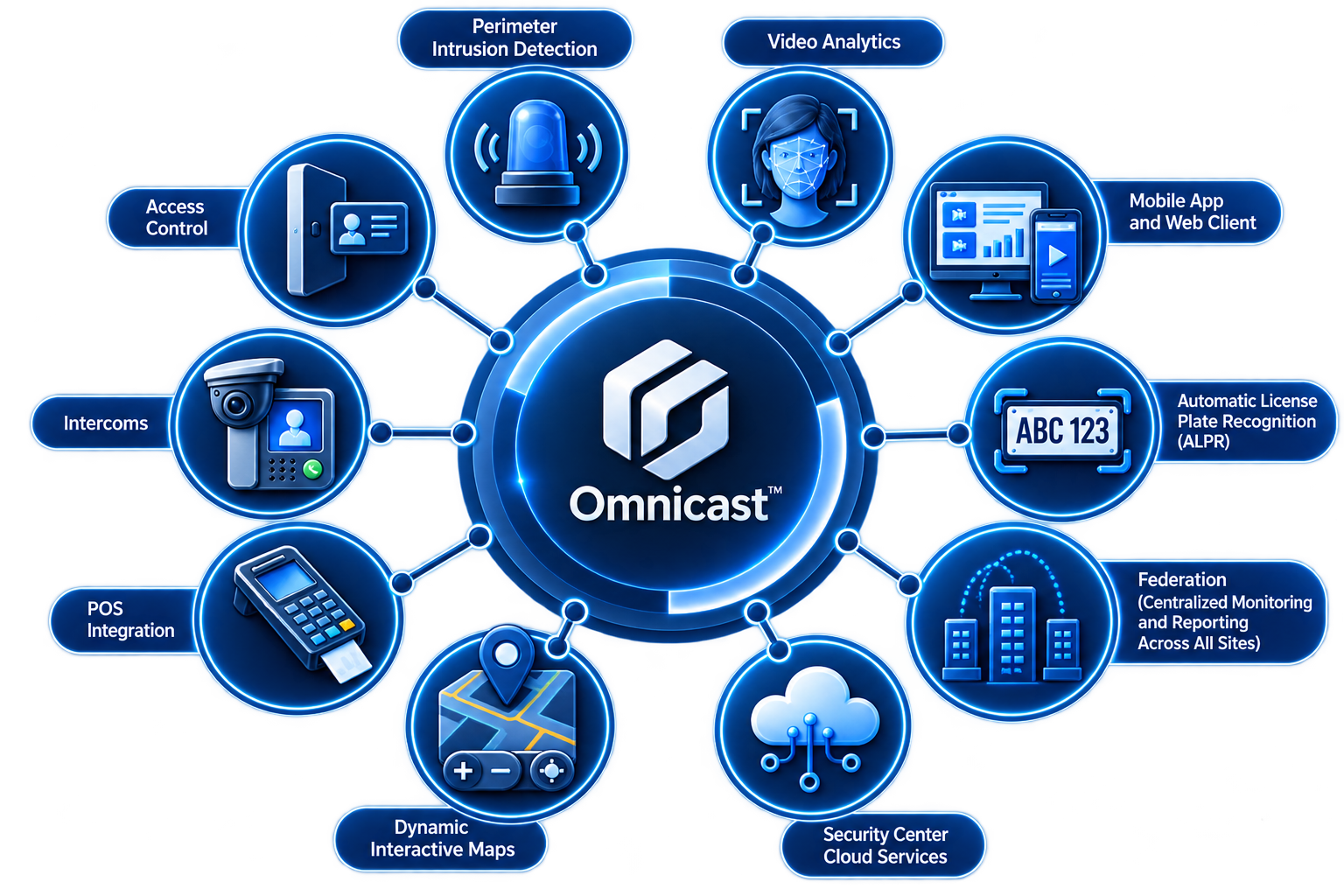
An alarm entry in a list answers only one question: what happened? The operator usually needs more context: where did it happen, and what is nearby?
Security Center uses maps to provide this spatial context. Operators can see cameras, doors, zones, and other system entities in their physical context, locate an event on a floor plan or geographic map, and quickly identify the devices associated with that location.
Instead of receiving an alarm and then searching separate lists for the relevant camera or door, the operator can start with the location of the event itself.
In simplified terms, the workflow looks like this:
event → location → nearby camera → access point → operator action
This is another way unified architecture shows up in practice — not just in the system design, but in the operator’s day-to-day workflow.
When Data from One System Becomes Part of Another System’s Workflow
The interaction between AutoVu and Synergis provides an even clearer example of unified architecture in practice.
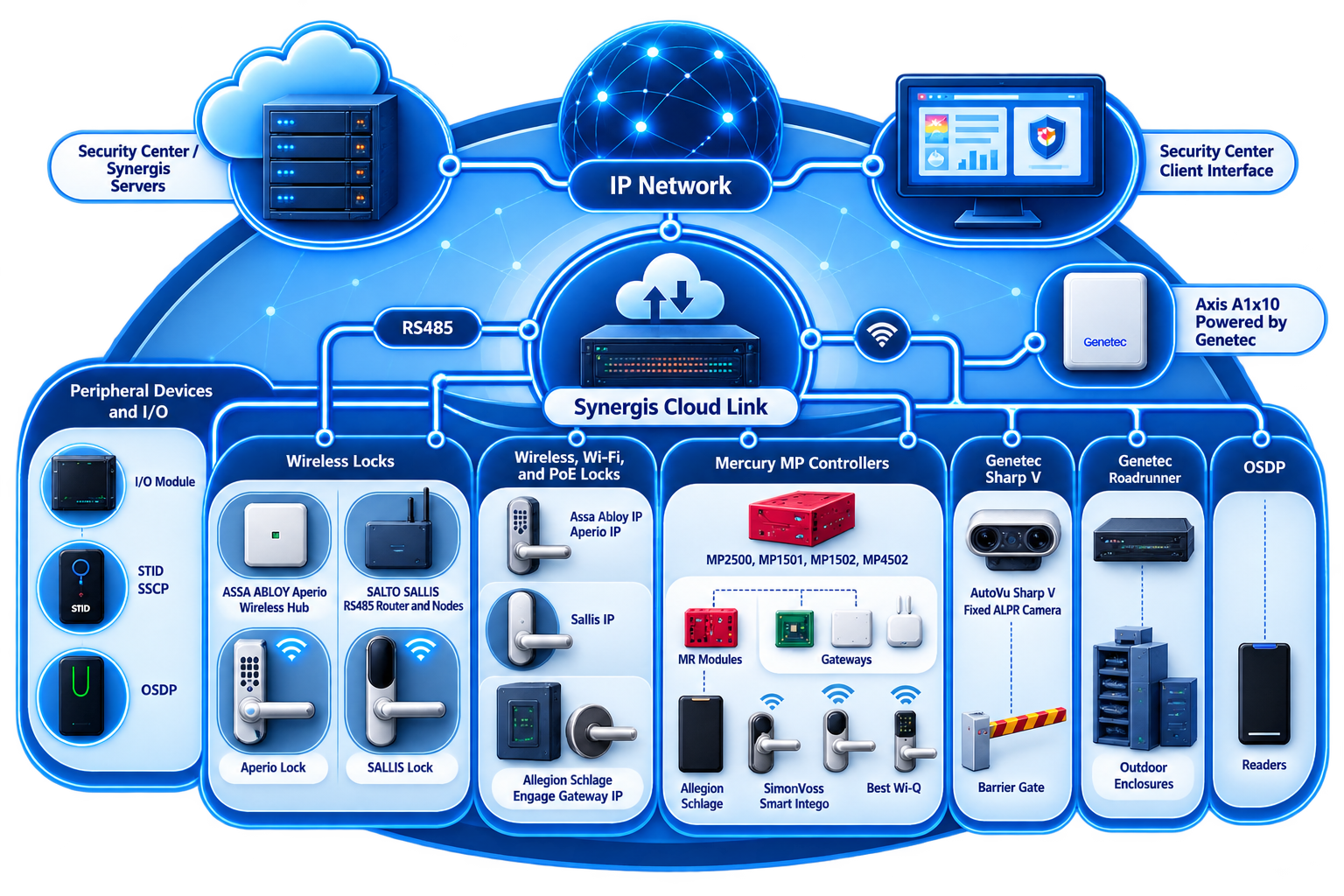
A recognized vehicle license plate can be used as an identifier within access control logic. AutoVu recognizes the plate, and Synergis uses that data as part of an access-control workflow based on the configured access rules.
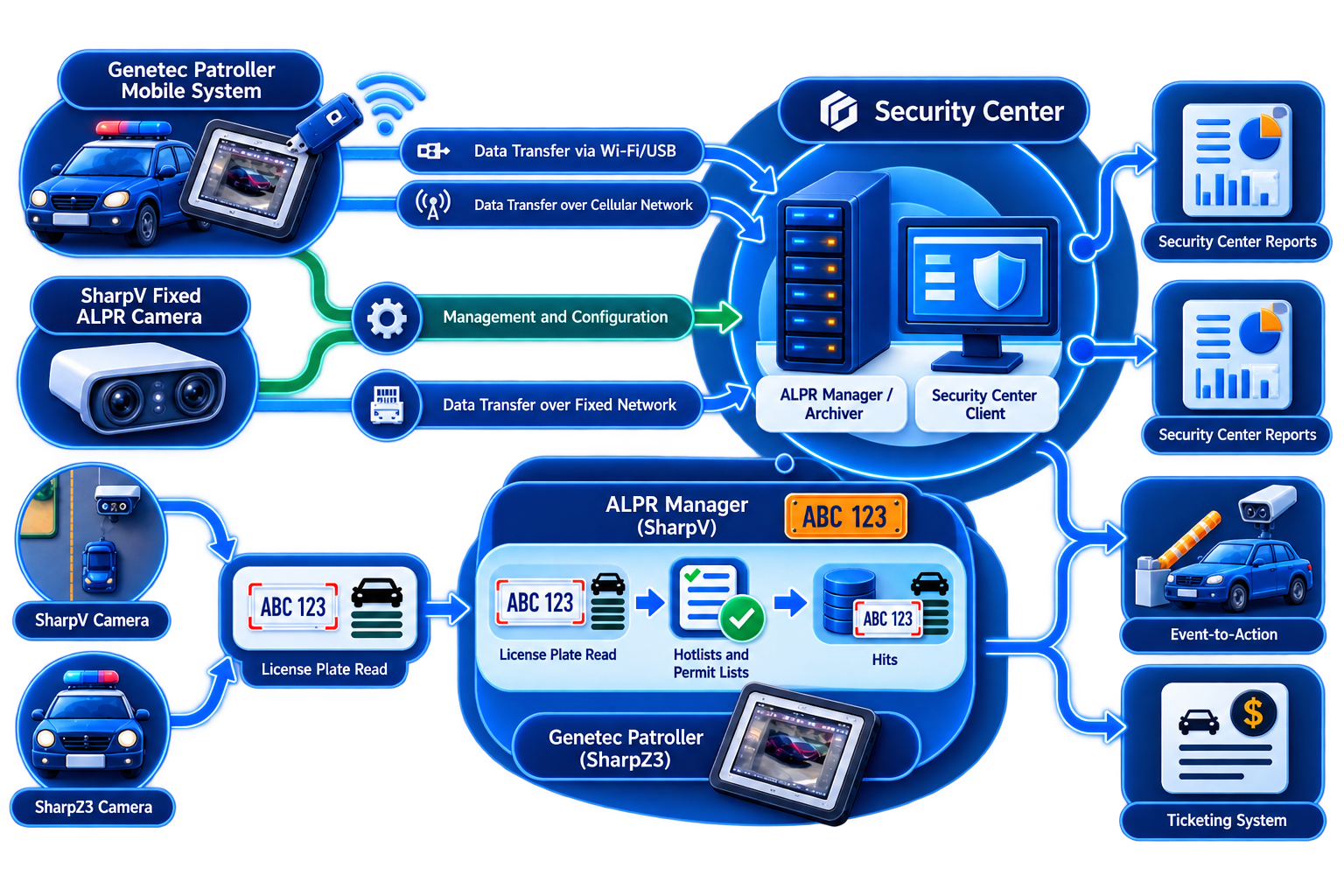
In other words:
vehicle → license plate recognition → identifier → access decision
The value here is not that the operator can see ALPR and access control in the same interface.
The same principle can extend to other data sources, from intercoms to external sensors. What matters is not simply connecting another device, but being able to use the events it generates within a shared operational context.
It’s Not About How Many Systems Are Connected
A unified security system is not defined by how many subsystems are connected or whether they are accessible through the same interface.
Architectural value
The architectural value emerges when these subsystems operate within a shared operational context: data from one can enrich an event from another, distributed sites can retain their autonomy while remaining accessible for centralized operations, and operators can see not just an alarm, but its location and the related system entities.
This is the perspective from which it makes sense to evaluate Genetec Security Center. Within the platform, Omnicast, Synergis, AutoVu, and other components can operate as parts of a shared architecture rather than simply as separate systems presented through a common interface.
In the next articles in this series, we’ll look at what this approach means in practice for specific security functions — video surveillance, access control, incident management, and video analytics.